In recent years, air purifiers have become a "standard" for many households. Especially for newly renovated houses, families with children and pets, or living in areas with poor air quality, they always want to buy a purifier to make the air at home cleaner.
However, some friends roast: "After half a year, the formaldehyde smell is still heavy", "The filter screen is painful to replace", "The noise is as loud as a tractor after driving for a long time". What's even more confusing is that some doctors don't even recommend using air purifiers.
What the hell is going on here? Is air purifier an "intelligence tax" or is it really useful? Let's have a clear conversation today.
1、 What is the use of an air purifier? First, let's talk about its' true abilities'
The core function of an air purifier is to filter out dirt in the air. For example, particulate matter such as PM2.5, pollen, and dust can be intercepted by HEPA filters (high-efficiency air filters); Formaldehyde and benzene, harmful gases generated during decoration, can be partially adsorbed by activated carbon filters. High end models also use decomposition techniques (such as amino decomposition) to turn formaldehyde into harmless water and carbon dioxide. If someone has allergies at home, or if they have cats or dogs that shed a lot of hair, an air purifier can reduce allergens in the air and alleviate symptoms of sneezing and runny nose.
For example, my friend's house was just renovated last year, and when formaldehyde was measured in the living room, it exceeded the standard by more than twice. She bought a purifier with formaldehyde decomposition function and tested it again after a week, and the value dropped to a safe range. She said the most obvious feeling was that she could smell the pungent "decoration smell" in the previous house, but now she can hardly smell it.
In addition, air purifiers are also useful for detecting secondhand smoke and cooking fumes. For example, if someone is smoking at home or cooking with a lot of oil fumes, a purifier can quickly absorb odor molecules and make the air fresher. Especially for small apartments with poor ventilation, this is particularly practical.
Another point that is easily overlooked is sterilization and disinfection. Nowadays, many purifiers are equipped with ultraviolet lamps or plasma generators, which can inactivate bacteria and viruses in the air. For example, during the flu season, if there are elderly or children at home, using a purifier can reduce the risk of cross infection.
2、 But air purifiers also have "pitfalls", and using them incorrectly can actually cause blockages
Let's talk about the most realistic thing first - spending money. Buying a machine is a sum of money, and a filter is a bottomless pit. The filter screen of a regular purifier needs to be replaced every six months to a year, ranging from two to three hundred to thousands per set.
What's even worse is secondary pollution. The filter will accumulate dust after prolonged use, and if not replaced in a timely manner, it is easy for bacteria and mold to grow in humid environments. These dirty things will instead float out with the air circulation, which is equivalent to 'the more purified, the dirtier'. This situation is more common in the southern rainy season or in households with high humidity.
Another issue is that the scope of application is limited. The purification effect of a purifier is strongly related to the room area. For example, a machine with a CADR value (purification efficiency) of 500m ³/h can handle up to 50-60 square meters of space. If the living room is large or the open kitchen is connected to the dining room, one machine cannot cover it completely, and two machines need to be bought, which directly doubles the cost.
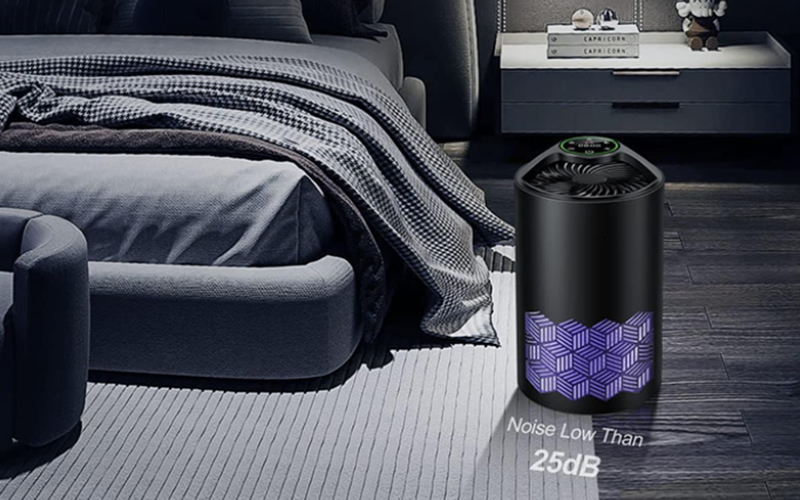
Additionally, noise is also an issue. Cheap purifiers, in order to save costs, have average motor and fan quality. When turned on in high gear, the noise can reach over 70 decibels, similar to a washing machine, making it impossible to fall asleep at night. Even for big brands, the low-end mode noise can be controlled at 30-40 decibels, but the purification speed will also slow down, so it needs to be balanced.
3、 Why don't doctors recommend using it? Actually, it is a conditional 'not recommended'
Doctors are not completely denying air purifiers, but rather reminding not to overly rely on them. For example, some families think that buying a purifier means everything is fine. They keep the windows closed all day long, which can lead to an increase in indoor carbon dioxide concentration and insufficient oxygen. Over time, they may feel dizzy and lack energy. Especially for children, being in this environment for a long time may affect their development.
Additionally, purifiers cannot solve the fundamental problem. For example, when outdoor air pollution is severe (such as during hazy days), purifiers can only purify indoor air, but outdoor pollution still seeps in through gaps in doors and windows. If you want to completely improve, you also need to cooperate with opening windows for ventilation (choose a time with good air quality), using a fresh air system, or reducing pollution from the source (such as choosing environmentally friendly decoration materials).
Another important thing is not to buy inferior products. Some purifiers on the market have falsely labeled parameters, such as CADR values that are high, but the actual purification effect is poor; Or use a carbon cloth filter, which is prone to acid and odor; Some even release ozone, which is harmful to the respiratory tract if inhaled for a long time. Doctors are concerned that ordinary people who do not understand technology are easily misled by propaganda, and buying unreliable machines may actually be detrimental to their health.
If the home really needs it (such as new decoration, people with allergies, keeping pets), choosing the right machine is more important than following the trend. Here are three recommended models with good reputation and reliable technology, each with its own unique skills.
1. Midea Forest Home T1000 Lite: The "All rounder King" for large apartments
The biggest advantage of this Midea model is its large purification capacity, with a CADR value (particulate matter) of up to 1000m ³/h and a CADR value of 700m ³/h for formaldehyde. One unit is sufficient for a large flat layer of 120 square meters. The filter uses H13 grade HEPA, which can filter 99.97% of 0.3 micron particles, and allergens such as pollen and dust mites cannot escape. The activated carbon layer is equipped with amino decomposition technology, which can decompose formaldehyde into water and carbon dioxide, avoiding secondary pollution.
The noise control is also done well, with a low mode of only 35 decibels, similar to speaking softly, and it doesn't affect sleep when turned on at night. With a rated power of 92W, it only consumes two units of electricity per day, which is much more energy-efficient than air conditioning. The price is 2499 yuan, which is considered cost-effective among the same level, suitable for large apartment families with limited budget but want to achieve it in one go.
2. 352 X89C: "Safety Guardian" for Maternal and Child Families
The 352 model is designed specifically for mothers and infants, with a core focus on full effect purification. It uses a tower type multi-layer filter structure, from the primary filter to H13 grade HEPA, then to X-WAVE honeycomb activated carbon layer, and finally to ultraviolet sterilization and high concentration plasma technology, a total of nine layers of filtration. Formaldehyde, TVOC and other gaseous pollutants can be treated by activated carbon adsorption and amino decomposition. The measured PM2.5 purification efficiency exceeds 90%, and the bacterial and viral inactivation rate is 99.9%.
The most considerate is intelligent monitoring, with built-in formaldehyde PM2.5、TVOC、 The temperature and humidity sensor will automatically increase the wind speed when the air quality is poor, and then decrease it to save electricity when it is good. There are universal wheels at the bottom, making it easy to push and walk. The anti tipping and power-off function is particularly friendly to families with children. Although it's not cheap, considering it's more reassuring for mothers and infants, it's worth it.
3. Toshiba Big White Pear: medical "disinfection and sterilization expert"
Toshiba's main medical grade disinfection and sterilization, plasma technology can actively release positive and negative ions, destroy the cell structure of virus and bacteria, and the actually measured inactivation rate of H1N1 influenza virus is 99.9%. It is also reliable to use it to remove formaldehyde in newly renovated houses. The composite filter and activated carbon layer have dual adsorption, combined with ultraviolet UV-C lamps, which can reduce the formaldehyde concentration from 0.2mg/m ³ to 0.03mg/m ³ in 3 hours (the national safety line is 0.08mg/m ³).
The operating noise is as low as 29.7 decibels, quieter than the lowest level of the air conditioner, and there is almost no sound heard in sleep mode. The intelligent digital display panel can display real-time PM2.5 and formaldehyde values, and the operation is particularly intuitive. Medical level certification adds professional endorsement, suitable for individuals with respiratory sensitivity, new home users, or healthy families pursuing high cost-effectiveness.
Ultimately, air purifiers are not a "panacea"
Air purifiers are useful, but don't expect them to solve all air problems. When it comes to opening windows for ventilation, it is more important to choose environmentally friendly materials during decoration. Cleaning regularly and reducing dust accumulation are the basic tasks that need to be done well before the purifier can "add icing on the cake". If you decide to buy, choose reputable brands with reliable technology, durable filters, and low noise. Don't be tempted by cheap prices and buy miscellaneous brands, otherwise you may be punished for spending money on them. After all, the matter of breathing cannot be taken lightly.



.jpg)

.jpg)
.jpg)


.jpg)

.jpg)
.jpg)
.jpg)


.jpg)
.jpg)
.jpg)
.jpg)
.jpg)

 Follow us
 19020522681
  E-mail